
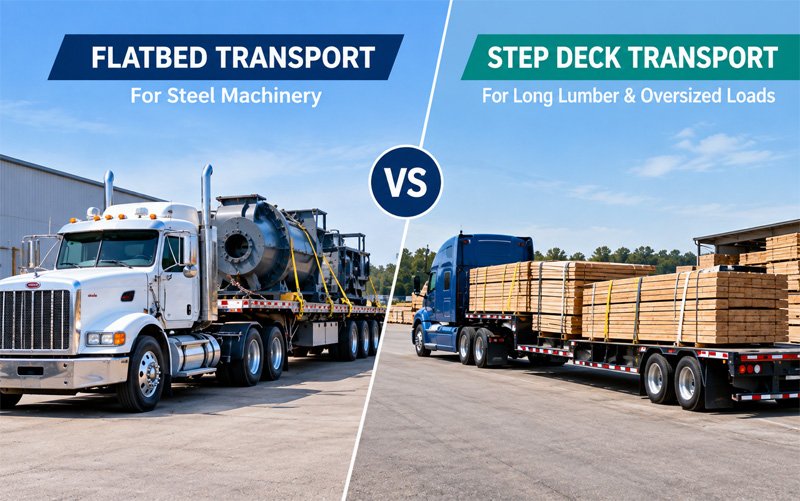
When freight is too large, awkward, or unsuitable for an enclosed trailer, a flatbed or step deck may be the right equipment to discuss. Both can carry loads that require open access for loading and unloading. They are not interchangeable, however. The height and shape of the cargo, the way its weight sits on the deck, and the available route all influence the decision.
This matters for steel, industrial machinery, and lumber. A load that appears straightforward in a product photo may have lifting points, overhang, uneven weight, or securement needs that change the transport plan. Before asking for a flatbed or step deck quote, collect the actual load details and consider how the shipment will be handled at both ends.
How Does a Flatbed Trailer Work?
A standard flatbed offers a generally level, open deck. Its open sides can make it practical for freight loaded by forklift or crane, such as bundled building materials, structural components, and certain types of machinery. The open design also means the load must be protected and secured for travel. Weather exposure, packaging, and any need for tarping should be discussed before dispatch.
The usable dimensions and payload depend on the specific vehicle, trailer, and legal operating limits. Avoid choosing a flatbed simply because the cargo fits its deck length. Check the overall loaded height, width, weight distribution, loading method, and safe access at the pickup and delivery sites.
What Makes a Step Deck Different?
A step deck has an upper deck near the front and a lower main deck behind it. The lower section can provide more room for taller freight while helping keep the overall loaded height within applicable limits. That can make step deck transportation useful for certain machines, fabricated components, or other tall loads that are difficult to move on a standard flatbed.
A lower deck is not an automatic permit exemption. The total loaded dimensions, axle loads, route, and equipment configuration still matter. The step between deck sections can also affect where a long or irregular item can sit. Give the transportation provider a dimensioned drawing or measured cargo profile rather than assuming that any tall item belongs on a step deck.
Steel and Coils: Think Beyond Total Weight
Steel shipments vary widely. Bundles, fabricated sections, plate, and coils do not all load or secure in the same way. For coils in particular, orientation, concentrated weight, support, and restraint need careful planning. A quoted gross weight alone does not tell the carrier enough to select equipment or plan securement.
Provide the number of pieces, individual weights, dimensions, packaging, lifting method, and any manufacturer handling instructions. Identify whether the cargo will be craned onto the deck or loaded by another method. The shipper and transport provider should agree on the loading plan and securement responsibilities before the vehicle arrives.
Machinery and Lumber Need Different Plans
Industrial machinery may have a high centre of gravity, fragile external parts, uneven weight, or designated tie-down points. Confirm whether removable components must be secured separately and whether the machine can be driven, lifted, or only craned. Accurate height measurements should include attachments and packaging.
Lumber and building materials bring another set of questions. Bundle length, stacking, protection from weather, and unloading equipment affect the trailer choice. Long material may require a different loading arrangement from compact palletized goods. For either industry, sending clear photos alongside measurements can reduce assumptions during quoting, though photos never replace verified dimensions and weights.
Check Permits, Route, and Site Access Early
In Ontario, loads that exceed applicable vehicle or load dimension and weight limits may require an oversize or overweight permit. The province’s permit guide explains that applications include load-specific dimensions and route information. Cargo securement requirements also apply to commercial vehicles carrying loads on Ontario roads.
Do not wait until pickup day to reveal a height, width, or weight issue. A permitted move can require route review and additional planning. At the destination, confirm that the truck can reach the unloading area and that the receiving crew has the correct equipment, space, and appointment details.
Request a Quote with Complete Load Details
To compare flatbed and step deck transport, send the pickup and delivery addresses, shipment date, overall and individual dimensions, item weights, photographs or drawings, and loading instructions. Explain any tarping needs, fragile areas, crane requirements, or site restrictions. Ask how the proposed equipment and route address the cargo’s actual shape and handling needs.
Clockwork Warehousing Ltd. lists flatbed and step deck transportation among its services. Its team can review the shipment information and confirm whether appropriate equipment, route coverage, and scheduling are available. Choosing the right trailer starts with a complete description of the load, not a guess based on the product category.